
Top 10 Best Budget Smartphones of 2026: High Performance for Under $300
Finding a high-quality smartphone no longer requires emptying your savings account. In 2026, the line between flagship features and entry-level devices has blurred further, bringing high-refresh-rate OLED screens, capable 5G processors, and multi-day battery life to the sub-$300 market. This guide breaks down the absolute best budget phones available this year, helping you maximize your value without sacrificing daily performance.
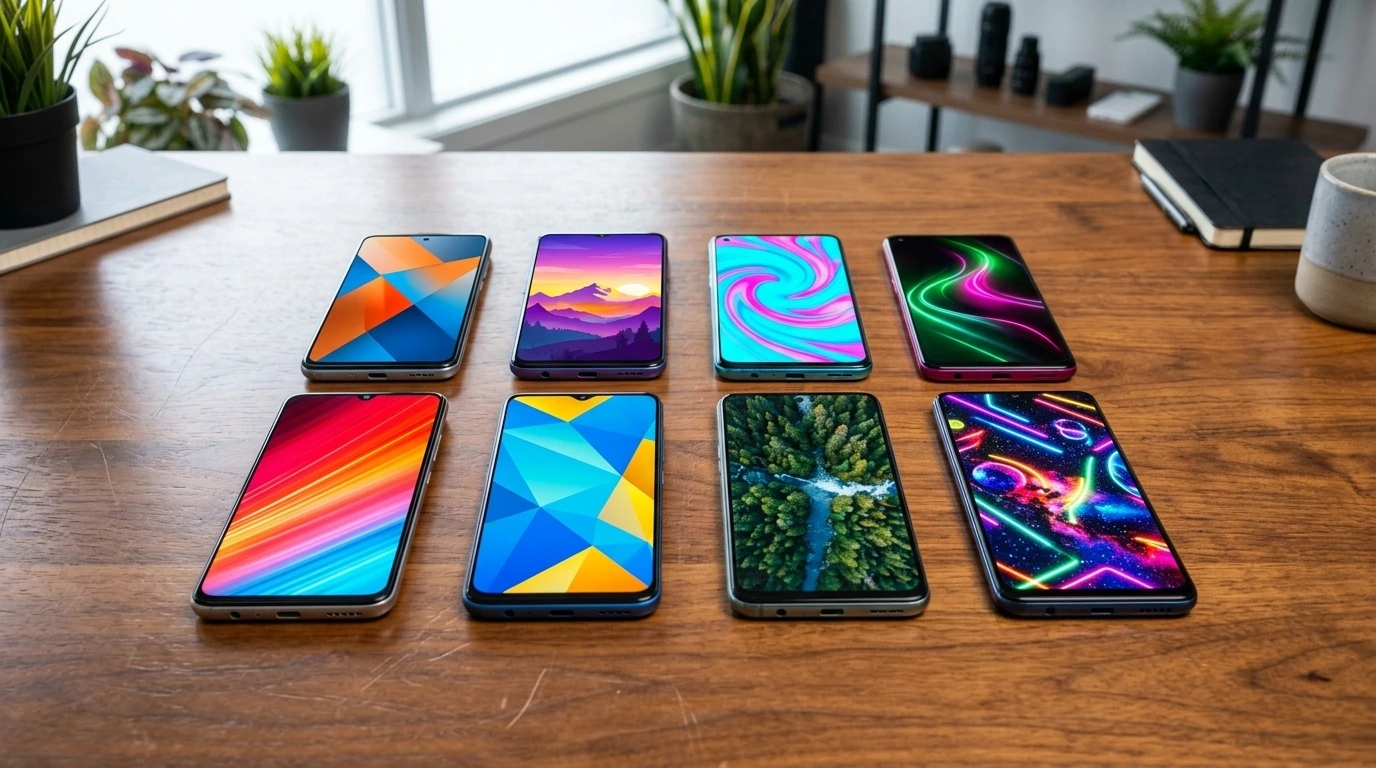
- OLED is the New Standard: Even under $250, many 2026 budget models now feature 120Hz AMOLED displays instead of low-contrast LCDs.
- 5G is Mandatory: Almost all notable budget releases in 2026 feature reliable mid-band 5G connectivity for faster browsing.
- Longer Support Lifespans: Manufacturers are extending software updates to 3-4 years for entry-level devices, increasing their longevity.
- Charging Speeds are Up: Fast charging (30W to 67W) is increasingly common, though wall adapters are sometimes omitted from the retail packaging.
Key Factors to Consider in a 2026 Budget Phone
When shopping in the budget tier, prioritizing your specific needs is essential. Manufacturers must make compromises to hit low price points. Understanding where those cuts are made will help you choose a device you will not regret buying six months down the road.
- RAM and Storage: Avoid phones with less than 6GB of RAM. For smooth multitasking in 2026, 8GB of RAM paired with 128GB of internal storage is the sweet spot for budget devices.
- Processor Efficiency: Look for modern 4nm or 6nm chipsets from MediaTek (Dimensity series) or Qualcomm (Snapdragon 4 or 6 series). These chips prioritize battery efficiency while delivering smooth UI navigation.
- Camera Expectations: Do not be fooled by triple-camera setups on cheap phones. Usually, only the main sensor is of good quality; the macro and depth sensors are often low-resolution fillers.
Top 10 Budget Smartphones of 2026
Here is our curated list of the top budget smartphones released or widely available in 2026, evaluated based on performance, display quality, battery life, and overall software experience.
1. Samsung Galaxy A17 5G
Samsung continues to dominate the entry-level space with the Galaxy A17 5G. It stands out by offering a gorgeous 90Hz Super AMOLED display and a software update commitment that rivals mid-range devices.
- Pros: Stunning display, 4 years of OS updates, clean One UI interface.
- Cons: Lacks a charger in the box; plastic back scratches easily.
2. Moto G Power 5G (2026)
Motorola focus on battery life shines in this iteration. With a massive 5,000mAh battery and highly optimized clean Android software, this phone easily lasts two days on a single charge.
- Pros: Exceptional battery life, 30W fast charging, clean near-stock software.
- Cons: Camera performance in low light is mediocre.
3. Redmi Note 15 5G
Xiaomi Redmi lineup remains the king of raw specifications per dollar. The Redmi Note 15 5G features a 120Hz AMOLED display and a highly capable MediaTek Dimensity processor that handles light gaming with ease.
- Pros: 120Hz display, 67W fast charging included, excellent value.
- Cons: HyperOS contains pre-installed bloatware; software updates can be slow.
4. Poco M8 Pro 5G
Designed for younger users and budget gamers, the Poco M8 Pro focuses heavily on processor performance and thermal management, making it the best gaming option under $250.
- Pros: High-performance chipset for the price, responsive touch sampling.
- Cons: Polarizing, bold design; plastic build feels cheap.
5. Samsung Galaxy A27 5G
Sitting at the very top of the budget limit, the Galaxy A27 offers a more premium triple-camera setup with Optical Image Stabilization (OIS) on the main lens, making it the best budget camera phone.
- Pros: OIS-enabled main camera, IP67 water resistance rating, premium design.
- Cons: Slightly more expensive than other options on this list.
6. CMF Phone 2 by Nothing
Bringing unique design aesthetics to the budget tier, the CMF Phone 2 offers a clean, bloatware-free Nothing OS experience and a striking industrial design with interchangeable back covers.
- Pros: Beautiful, unique design; smooth bloatware-free software.
- Cons: Limited carrier compatibility in certain North American regions.
7. OnePlus Nord N40 5G
The Nord N40 offers a balanced experience with a strong emphasis on daily usability, featuring 45W SuperVOOC charging and a bright display that is easy to read outdoors.
- Pros: Fast charging, comfortable ergonomics, bright display.
- Cons: Only guaranteed one major Android version update.
8. Moto G Play (2026)
For buyers on a strict sub-$150 budget, the Moto G Play offers basic, reliable smartphone functionality without any unnecessary frills.
- Pros: Highly affordable, durable build, reliable call quality.
- Cons: HD+ resolution screen only; slow charging speeds.
9. Realme 13 5G
Realme delivers an eye-catching design with a vegan leather back option and a highly responsive 120Hz display, making it look and feel much more expensive than it is.
- Pros: Premium vegan leather back, fast charging, smooth UI.
- Cons: Heavy software customization may not appeal to everyone.
10. Infinix Hot 60 Pro
Infinix targets users who need massive storage. The Hot 60 Pro offers a 256GB storage configuration at a price where most competitors only offer 128GB.
- Pros: Generous storage capacity, loud dual speakers, large screen.
- Cons: Software UI feels unpolished; limited global software support.
Budget Smartphone Specifications Comparison
The table below summarizes the key specifications and estimated pricing for these top budget devices in 2026. Note that prices can vary based on regional taxes, carrier promotions, and retailer discounts.
| Model | Display | Battery & Charging | Best For | Est. Price (USD) |
|---|---|---|---|---|
| Samsung Galaxy A17 | 6.5" 90Hz AMOLED | 5,000mAh (25W) | Software Longevity | $229 |
| Moto G Power (2026) | 6.6" 120Hz LCD | 5,000mAh (30W) | Battery Life | $249 |
| Redmi Note 15 5G | 6.67" 120Hz AMOLED | 5,000mAh (67W) | Overall Hardware Value | $259 |
| Poco M8 Pro 5G | 6.6" 120Hz AMOLED | 5,000mAh (45W) | Budget Gaming | $219 |
| CMF Phone 2 | 6.7" 120Hz AMOLED | 5,000mAh (33W) | Design & Clean OS | $269 |
Real-World Scenarios: Which Phone Fits Your Lifestyle?
To make your decision easier, let us look at how these choices play out in real-world use cases.
Scenario 1: The Daily Commuter and Student
If you spend hours on public transit listening to podcasts, browsing social media, and reading PDFs, the Moto G Power 5G (2026) is your ideal companion. Its exceptional battery optimization ensures that even with heavy cellular data usage and Bluetooth streaming, you will return home with plenty of battery life remaining. You will not have to carry a bulky power bank in your backpack.
Scenario 2: The Casual Mobile Gamer
If you enjoy playing games like Genshin Impact or PUBG Mobile on medium settings during your breaks, the Poco M8 Pro 5G is the clear choice. Its chipset is tuned for sustained performance without aggressive thermal throttling, and the 120Hz AMOLED screen ensures that fast-paced action looks fluid and responsive.
Understanding the Trade-offs: What Do You Give Up?
While budget phones in 2026 are incredibly capable, buyers must remain realistic about what is missing compared to $1,000 flagship devices:
- Build Materials: Most budget phones utilize polycarbonate (plastic) frames and backs rather than aluminum and ultra-strong Gorilla Glass Armor. Using a protective case is highly recommended.
- Auxiliary Cameras: While the primary 50MP cameras on these phones can capture excellent daytime photos, the ultra-wide and macro lenses are generally weak and produce noisy, soft images.
- Wireless Charging: This feature remains almost entirely exclusive to mid-range and premium devices. You will need to rely on USB-C cables for charging.
Frequently Asked Questions
Are budget phones in 2026 good for gaming?
Yes, modern budget processors can easily handle popular casual and competitive games. However, for graphically demanding 3D games, you will need to run them on low-to-medium settings to maintain stable framerates.
Do these budget phones support eSIM?
Support for eSIM is growing in the budget segment. Devices like the Samsung Galaxy A17 and Moto G Power support dual-SIM configurations via one physical SIM slot and one eSIM, but you should verify regional carrier compatibility before purchasing.
How long will a 2026 budget phone last?
With proper care and a protective case, a budget phone purchased in 2026 can easily last 3 to 4 years. Choosing a brand like Samsung, which offers extended software support, ensures your device remains secure over time.
Do budget phones come with headphone jacks in 2026?
While headphone jacks have disappeared from almost all flagship phones, several budget models—particularly from Motorola and Xiaomi—still retain the 3.5mm audio jack for users who prefer wired headphones.


Post a Comment for "Top 10 Best Budget Smartphones of 2026: High Performance for Under $300"