
Demystifying AI: A Beginner's Guide to How Artificial Intelligence Works and Its Impact
What exactly is Artificial Intelligence, and why has it become such a central topic across industries and daily life? For many, AI remains a complex, often intimidating concept, yet its influence is rapidly expanding. Understanding its core mechanisms and broader implications is no longer just for specialists; it's a foundational aspect of digital literacy in 2026.
This guide aims to demystify AI, offering a clear, accessible overview of how these intelligent systems operate and the profound reasons why their development and application matter to everyone.

Demystifying Artificial Intelligence: A Core Overview
At its heart, Artificial Intelligence refers to the simulation of human intelligence processes by machines, especially computer systems. These processes include learning (the acquisition of information and rules for using the information), reasoning (using rules to reach approximate or definite conclusions), and self-correction. The goal is to enable machines to perform tasks that typically require human intellect, ranging from problem-solving and decision-making to understanding natural language and recognizing patterns.
Modern AI's core strength lies in its ability to process vast amounts of data at speeds and scales impossible for humans, identifying correlations and making predictions or classifications with remarkable accuracy. This capability underpins its utility across diverse sectors, transforming how industries operate and how individuals interact with technology.
The Building Blocks of Intelligence: How AI Systems Are Constructed
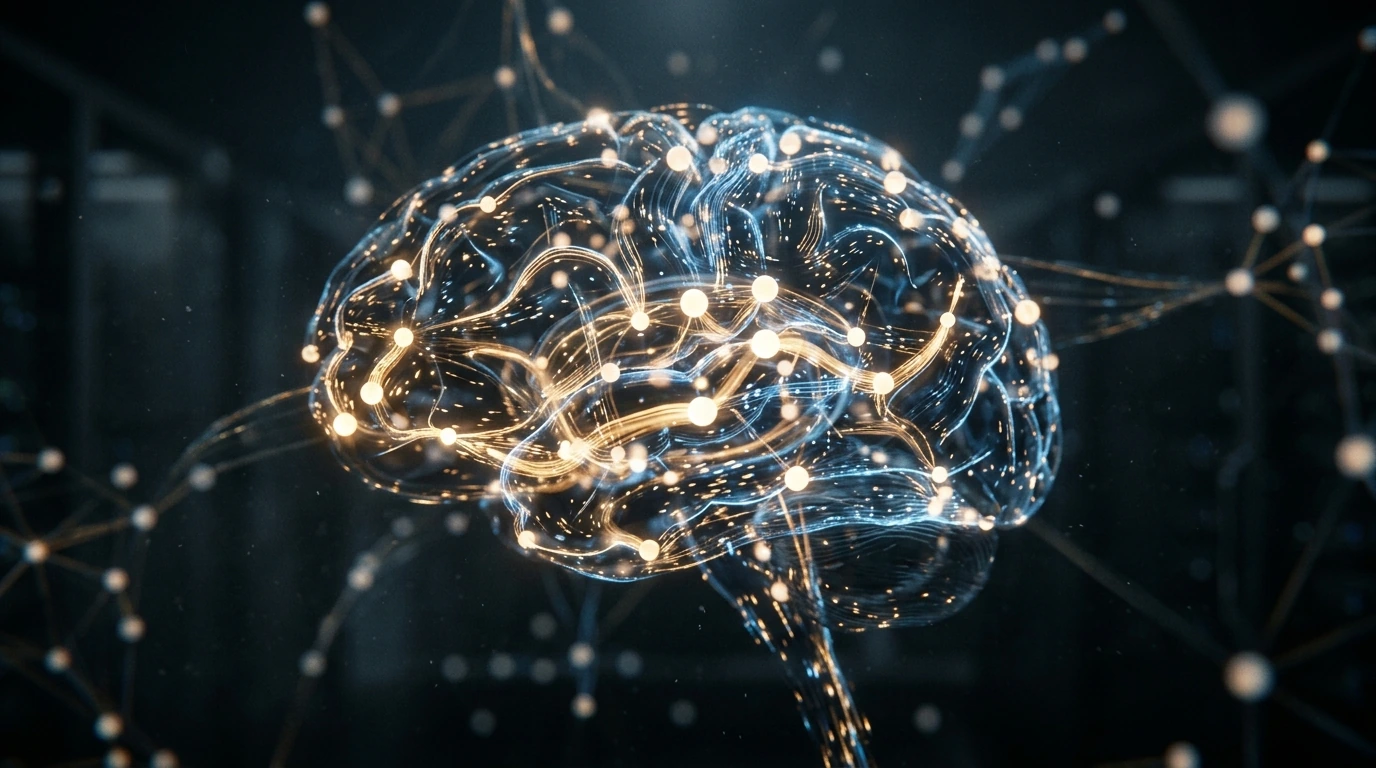
How do machines learn and reason? The foundation of most contemporary AI systems rests on algorithms, data, and computational power. Machine Learning (ML), a subset of AI, is particularly prominent, where systems learn from data without being explicitly programmed for every scenario. Deep Learning, a further subset of ML, utilizes multi-layered neural networks inspired by the human brain to process complex patterns in data like images, sound, and text.
The 'quality' of an AI system, in a practical sense, is heavily influenced by several factors:
- Data Volume & Quality: Extensive, diverse, and clean datasets are crucial for training robust models. Biased or insufficient data can lead to flawed AI outputs.
- Algorithmic Sophistication: The choice and design of algorithms determine how effectively the AI can learn, generalize, and make decisions.
- Computational Resources: High-performance computing, often involving specialized hardware like GPUs, is essential for training complex AI models efficiently.
- Model Architecture: The specific design of neural networks or other models impacts their ability to capture nuances and relationships within data.
AI in Action: Real-World Applications and Impact
The practical scenarios where AI is deployed are incredibly varied, demonstrating its adaptability and utility. From enhancing efficiency to enabling entirely new capabilities, AI's presence is pervasive.
- Healthcare: AI assists in diagnosing diseases earlier, personalizing treatment plans, and accelerating drug discovery.
- Finance: Fraud detection, algorithmic trading, and personalized financial advice are common AI applications.
- Transportation: Autonomous vehicles and optimized logistics routes rely heavily on AI for perception, decision-making, and navigation.
- Customer Service: Chatbots and virtual assistants powered by natural language processing (NLP) handle inquiries and provide support around the clock.
- Content Creation: AI tools assist in generating text, images, and even music, augmenting human creativity and productivity.
These applications underscore AI's capacity to automate routine tasks, analyze complex data for insights, and create more intuitive user experiences. The typical usability considerations often revolve around the accuracy of AI predictions, its integration into existing workflows, and the ease with which users can interact with AI-powered systems.

Navigating the AI Landscape: Opportunities and Challenges
As with any transformative technology, AI presents a dual-sided coin of immense opportunities and significant challenges.
Opportunities:
- Enhanced Efficiency: Automating repetitive tasks frees human workers for more creative and strategic endeavors.
- Data-Driven Insights: AI can uncover patterns and insights from massive datasets that are impossible for humans to process manually.
- Innovation: It fuels the creation of new products, services, and business models across various sectors.
- Problem Solving: AI offers powerful tools for tackling complex global issues, from climate modeling to disease eradication.
Challenges:
- Ethical Concerns: Issues like algorithmic bias, privacy violations, and job displacement require careful consideration and regulation.
- Complexity & Explainability: 'Black box' AI models can be difficult to understand, making it hard to trust or debug their decisions.
- Security Risks: AI systems can be vulnerable to adversarial attacks, leading to incorrect or malicious outputs.
- Resource Intensive: Developing and deploying advanced AI often requires significant computational power and specialized expertise.
PRO TIP: Understanding AI Bias
Always remember that AI models are only as unbiased as the data they are trained on. If historical data reflects societal biases, the AI will likely perpetuate them. Critically evaluating data sources and implementing fairness metrics are essential steps in mitigating AI bias.

The Enduring Significance of AI: Why It Matters to Everyone
The definitive purchasing verdict for 'understanding AI' is that it's an essential investment for nearly everyone. AI is not a niche technology; it's a fundamental shift in how we interact with information, automate tasks, and solve problems. Its value analysis extends beyond economic metrics to encompass societal impact, ethical considerations, and future readiness.
Who should invest time in understanding AI? Essentially, everyone. From policymakers needing to regulate its development, to business leaders seeking to leverage its potential, to students preparing for future careers, and even the general public who will increasingly interact with AI in their daily lives. A basic comprehension of AI—its capabilities, limitations, and ethical dimensions—empowers individuals to navigate the evolving digital landscape more effectively and participate in informed discussions about its future.
Different types of AI models serve distinct purposes, each with its own set of characteristics:
| AI Type | Description | Typical Applications |
|---|---|---|
| Narrow AI (Weak AI) | Designed and trained for a particular task. Operates within a predefined range of functions. | Virtual assistants (Siri, Alexa), recommendation systems, image recognition, spam filters. |
| General AI (Strong AI) | Hypothetical AI that can understand, learn, and apply intelligence to any intellectual task that a human being can. | Currently theoretical; a long-term goal for AI research. |
| Supervised Learning | Learns from labeled data, where the desired output is known for each input. | Email classification, medical diagnosis, predicting house prices. |
| Unsupervised Learning | Learns from unlabeled data, identifying patterns and structures without prior knowledge of outputs. | Customer segmentation, anomaly detection, data compression. |

Frequently Asked Questions About AI
- Is AI going to replace all human jobs?
- While AI will automate many routine and repetitive tasks, it's more likely to transform job roles rather than eliminate them entirely. New jobs requiring human-AI collaboration, oversight, and ethical reasoning are expected to emerge.
- How is Machine Learning different from AI?
- Machine Learning is a subset of Artificial Intelligence. AI is the broader concept of machines mimicking human intelligence, while ML specifically refers to systems that learn from data to improve performance on a task without explicit programming.
- What are the biggest ethical concerns with AI?
- Key ethical concerns include algorithmic bias (AI perpetuating societal prejudices), data privacy (how personal data is collected and used), accountability for AI decisions, and the potential for misuse (e.g., autonomous weapons).
- Can AI become conscious or truly sentient?
- As of 2026, current AI systems are designed to perform specific tasks based on algorithms and data; they do not possess consciousness, sentience, or subjective experience. The development of truly sentient AI remains a highly theoretical and debated topic among researchers.


Post a Comment for "Demystifying AI: A Beginner's Guide to How Artificial Intelligence Works and Its Impact"