

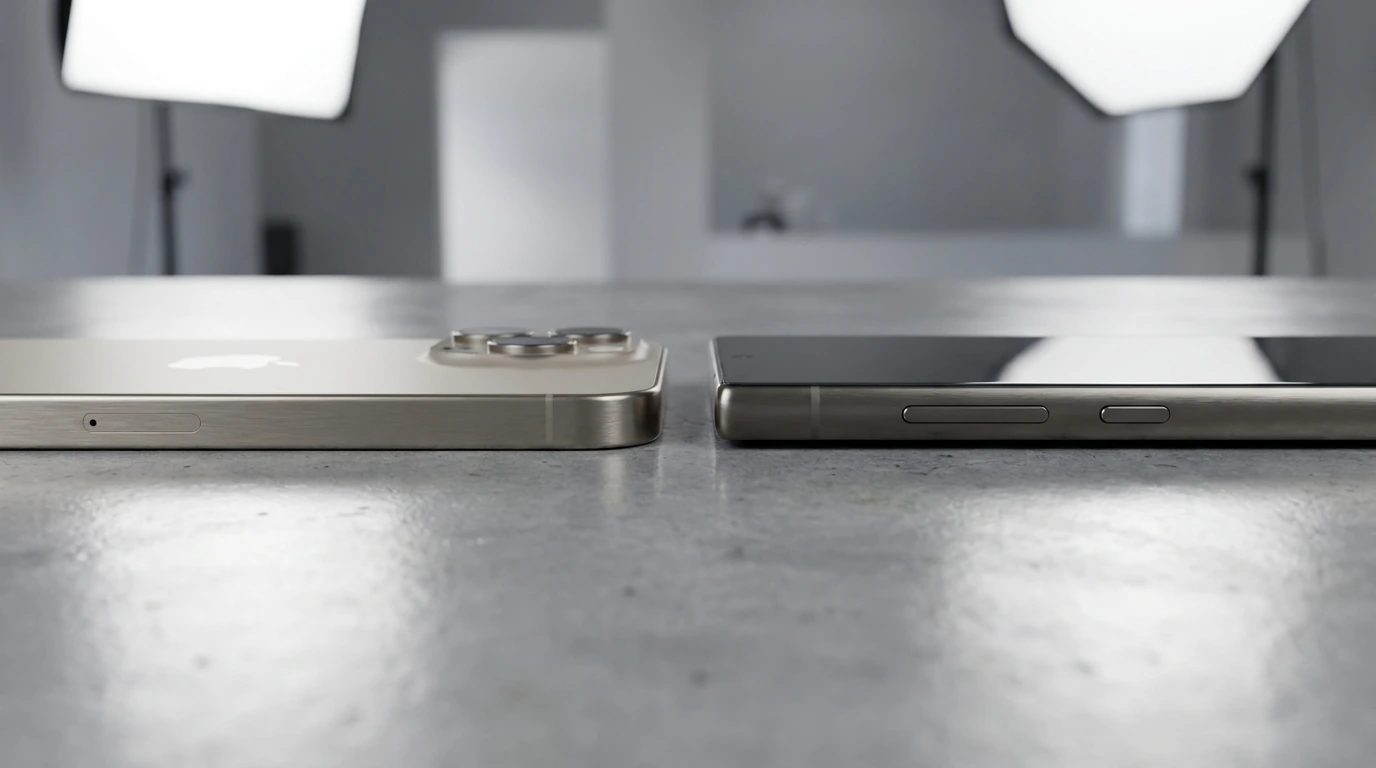
Choosing a tier-one smartphone flagship in 2026 requires navigating beyond marketing hyperbole and examining the physical, optical, and computational engineering under the hood. As Apple and Samsung push the boundaries of mobile hardware, the distinction between their respective top-tier offerings—the iPhone 17 Pro Max and the Galaxy S26 Ultra—lies not in sheer raw performance, but in how their hardware architectures execute daily tasks, computational photography, and sustained workloads.
The Core Problem: Architectural Divergence in Mobile Hardware
For several generations, premium smartphones have delivered identical performance ceilings for basic applications. The true differentiator in 2026 is the underlying philosophy of hardware optimization. Apple relies on deep, vertical integration of its custom silicon, optimizing execution threads at the microarchitectural level. Samsung, utilizing Qualcomm's custom Snapdragon architecture, counters with aggressive thermal dissipation envelopes, raw physical sensor dimensions, and open-platform productivity features.
To evaluate these devices objectively, we analyze them across four critical technical pillars: sensor-level optical performance, neural processing unit (NPU) throughput, thermal throttling under sustained computation, and long-term cost-to-performance depreciation.
Technical Specifications Side-by-Side
To understand the performance profiles of these devices, we must first inspect their physical specifications. The table below outlines the core hardware parameters of the 2026 flagships:
| Metric / Hardware Spec | Apple iPhone 17 Pro Max | Samsung Galaxy S26 Ultra |
|---|---|---|
| Main Sensor Architecture | 48 MP (1/1.28-inch equivalent), Sensor-Shift OIS | 200 MP (1/1.3-inch equivalent), Dual OIS |
| Telephoto & Zoom Optic | 48 MP, 5x Optical Prism, Tetraprism design | 50 MP (5x) & 10 MP (3x) Dual-Periscope system |
| Application Processor (AP) | Apple A19 Pro (TSMC 2nm-class N2 process) | Snapdragon 8 Gen 5 (Custom TSMC 3nm-class) |
| Thermal Dissipation Method | Graphene-coated internal housing, passive frame | Vapor Chamber (enlarged area) & Graphite pads |
| Base Memory Configuration | 12 GB LPDDR5X | 16 GB LPDDR5X |
| Expected Entry Retail Price | $1,199 USD | $1,299 USD |
Deep-Dive Camera Performance: Pixel Binning vs. Unified Native Resolution
The core differences in photography between these two systems stem from image processing pipelines and sensor-level mechanics.
Samsung employs a 200-megapixel sensor using 16-in-1 pixel binning (yielding 12.5 MP default output files). This engineering approach relies on sub-pixel splitting to absorb photons across distinct exposure intervals. In bright daylight, the sensor captures incredible spatial resolution by shooting in native high-resolution modes. However, in low-light environments, the small individual pixel size (0.56 microns prior to binning) demands heavy computational noise reduction, which can sometimes result in fine-detail smearing.
Apple’s 48-megapixel pipeline across all three sensors (Wide, Ultra-Wide, and Telephoto) prioritizes sensor-level uniformity. By maintaining a larger individual pixel footprint and combining it with their Photonic Engine—which applies Deep Fusion calculations directly to uncompressed RAW data early in the imaging pipeline—the iPhone 17 Pro Max preserves micro-contrast and local textures. This prevents the artificial, over-sharpened look that occasionally compromises high-megapixel sensors during aggressive cropping.
If you frequently capture fast-moving subjects (such as sports or animals) under interior lighting, disable auto-exposure stacking in your camera app settings. On the Galaxy, set the camera assistant to "Prioritize Speed over Quality" to bypass sub-pixel exposure passes and reduce shutter lag.
Sustained Thermal and Processing Performance
While the Apple A19 Pro boasts incredible single-core performance metrics due to its pioneering 2nm design node, its long-term sustainment depends on passive heat dissipation. The iPhone uses a graphite-sheathed chassis structure to direct heat away from the logic board.
Samsung's Galaxy S26 Ultra implements an expansive copper vapor chamber. This liquid-to-vapor phase-change system spreads heat over a larger surface area, allowing the Snapdragon 8 Gen 5 processor to run at peak execution speeds during sustained gaming or 8K video recording without severe thermal throttling. Apple's system, conversely, begins stepping down CPU cycles after roughly 12 to 15 minutes of extreme GPU utilization to prevent the screen from dimming.
Real-World Scenarios
Scenario A: Live Concert Videography under Dynamic Lighting
During a live concert performance featuring high-contrast strobes and deep shadows, the iPhone 17 Pro Max’s sensor-shift optical stabilization combined with its unified 48MP computational pipeline excels. Because its video processing pipeline handles real-time tone mapping in Dolby Vision at 4K/60fps without dropping frames, the transitions between dark backdrops and bright spotlights remain smooth.
The Galaxy S26 Ultra, using its dual-periscope system, allows for incredibly sharp physical magnification beyond 5x. However, zooming rapidly through its camera lenses can result in subtle exposure shifts as the ISP switches processing nodes from the 50MP sensor down to the 10MP module.
Scenario B: Professional On-Site Real Estate Inspection
For an architect documenting structural details inside a dimly lit attic space, the Galaxy S26 Ultra's high-resolution ultra-wide sensor and onboard stylus (S-Pen) provide a distinct workflow advantage. The user can capture fine architectural details in high-detail RAW formats, crop in to examine load-bearing components without losing clarity, and immediately annotate the high-resolution files on-screen.
The iPhone 17 Pro Max matches this image quality but lacks an integrated hardware interface for precise markup, requiring a multi-device workflow or external stylus solutions.
Who Should Choose Which Flagship?
Choose the Apple iPhone 17 Pro Max if:
- Your primary focus is color-accurate videography: The ProRes Log recording format and native integration with professional editing suites make it an essential tool for digital video production.
- You value uniform optics: Having matching 48-megapixel sensors across all lenses ensures consistent exposure, color grading, and detail representation.
- You seek long-term platform support: Apple’s hardware-to-software vertical alignment guarantees consistent OS updates with reliable background process management for years to come.
Choose the Samsung Galaxy S26 Ultra if:
- You require superior zoom ranges: The hardware configurations of the dual-periscope lens system provide unmatched clarity at 5x, 10x, and hybrid focal lengths.
- Multi-tasking is critical to your productivity: The inclusion of the S-Pen, combined with massive RAM overhead and desktop projection capabilities (Samsung DeX), makes this device a standalone workstation.
- You demand sustained thermal stability: The active vapor chamber cooling makes this the superior platform for sustained, high-intensity gaming and lengthy recording sessions.
The Decision Framework
When investing in a flagship device in 2026, look beyond base price points. The final decision rests on how the hardware integrates with your existing tools. If you use a macOS or iPadOS workstation, the unified clipboard, AirDrop speeds, and ProRes workflows of the iPhone 17 Pro Max offer immense value. If you need a flexible mobile workstation that operates independently of a broader ecosystem, the Samsung Galaxy S26 Ultra's physical hardware advantages—including superior sustained thermal performance and advanced optical magnification—make it the more versatile choice.
Frequently Asked Questions
1. Does Samsung's 200MP camera take better photos than Apple's 48MP camera?
Not necessarily. While Samsung's 200MP sensor captures higher spatial resolution in bright daylight, its individual pixels are much smaller. In low-light conditions, both cameras bin pixels down to similar resolutions (12MP to 24MP) to gather light effectively. Apple's larger default pixel layout and direct RAW processing often yield more natural micro-contrast and lower noise without artificial sharpening.
2. Which device has better battery life and thermal management?
The Samsung Galaxy S26 Ultra offers superior thermal management due to its large internal vapor chamber, which physically prevents performance drops during extended tasks. While both devices easily last a full day of intensive use, Samsung's device sustains peak processing speeds longer, whereas the iPhone cools itself by dimming the display and gently throttling CPU speeds.
3. Why is memory configuration (12GB vs. 16GB RAM) different between these platforms?
Android and iOS manage system RAM differently. Android’s garbage collection system and multitasking capabilities require larger memory buffers, which is why Samsung includes up to 16GB of RAM. Apple’s custom iOS memory compression allows the iPhone to achieve similar application loading speeds and background state preservation with 12GB of RAM.
link : iPhone 17 Pro Max vs Samsung Galaxy S26 Ultra: 2026 Camera, Performance, and Engineering Comparison