
Navigating Cloud Hosting Expenditures: The Indispensable Role of Cost Calculator Tools in 2026
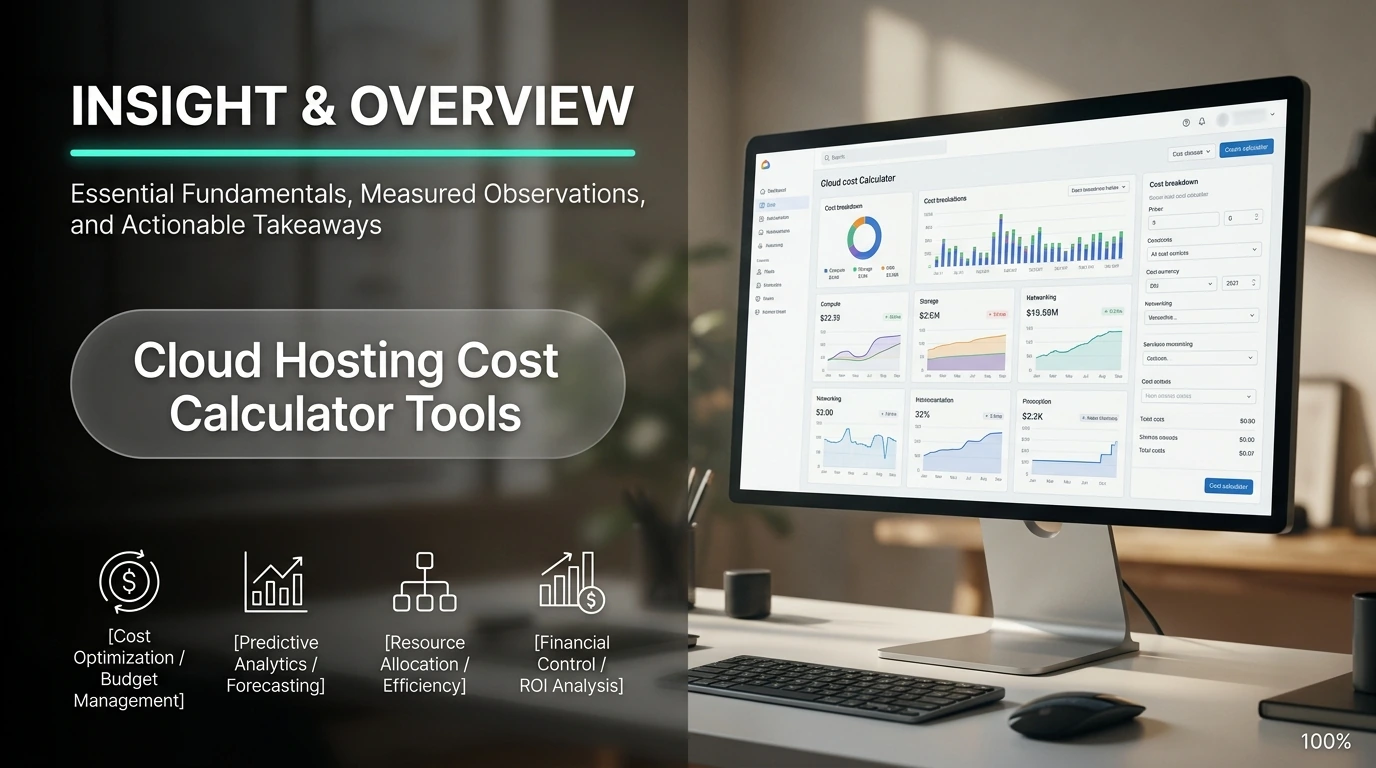
Many enterprises approaching cloud adoption often assume that the pricing structures of major providers are inherently opaque and difficult to predict, leading to a 'wait and see' approach to budgeting. This perception, however, overlooks the significant advancements in cloud hosting cost calculator tools, which, by 2026, have evolved into sophisticated, indispensable instruments for precise financial forecasting and optimization within complex cloud environments. These tools are no longer basic estimators; they are dynamic, feature-rich platforms that integrate with various services to provide granular, actionable cost insights.
Key Takeaways
- Modern cloud cost calculators offer granular, predictive analytics, moving beyond simple estimations.
- Effective use requires understanding service dependencies and configuring tools accurately for your specific workload.
- Integration with existing infrastructure and FinOps practices enhances their long-term value and accuracy.
- Regular review and adjustment of calculator inputs are crucial to reflect evolving cloud consumption patterns.
The Evolution of Predictive Cloud Economics
Early iterations of cloud cost calculators were largely static forms, requiring manual input of estimated resource usage and often failing to account for nuances like data transfer costs, managed service fees, or specific regional pricing variations. The calculators available today, however, leverage advanced algorithms and real-time pricing APIs from providers like AWS, Azure, and Google Cloud. They can simulate complex architectural patterns, incorporate various discount models (e.g., Reserved Instances, Savings Plans), and even project costs based on historical usage data imported from existing cloud accounts. This shift transforms them from mere estimation tools into powerful instruments for strategic financial planning, enabling organizations to model different deployment scenarios and understand their true total cost of ownership (TCO) before committing resources.
Core Capabilities of Contemporary Cost Calculators
The leading tools in 2026 offer a suite of functionalities that are critical for effective cloud financial management:
- Granular Service Breakdown: Users can specify individual services, such as compute instances (e.g., EC2, Azure VMs), storage volumes (e.g., S3, Blob Storage), databases (e.g., RDS, Cosmos DB), networking, and even serverless functions, with detailed configuration options.
- Workload-Specific Modeling: Beyond raw resources, these tools allow for the modeling of specific workloads, considering factors like peak traffic, continuous data ingress/egress, and compliance-driven storage tiers.
- Discount and Commitment Integration: They accurately factor in the savings from various commitment-based pricing models, helping users determine the optimal blend of on-demand, reserved, or spot instances.
- Multi-Region and Multi-Cloud Scenarios: Many tools now support comparing costs across different geographic regions and even between multiple cloud providers, crucial for hybrid or multi-cloud strategies.
- API Access and Automation: Advanced calculators offer APIs, allowing for integration into CI/CD pipelines or custom FinOps dashboards, automating cost projections as part of the development lifecycle.
Practical Application: Avoiding Common Financial Pitfalls
While powerful, these tools require informed usage to deliver accurate results. A common mistake is underestimating the impact of data transfer costs, particularly egress fees. Organizations often focus heavily on compute and storage, overlooking the cumulative effect of moving data out of a cloud region or between services. Another pitfall is failing to account for all associated managed service costs, which can include monitoring, logging, and security services that, while beneficial, add to the overall bill.

Illustrative Comparison: AWS vs. Azure for a Web Application
Consider a hypothetical e-commerce web application requiring a specific set of resources. Using a robust cost calculator, we can model the expenses across two major providers for a standardized setup:
| Service Category | AWS (Example Configuration) | Azure (Example Configuration) |
|---|---|---|
| Compute (4 vCPU, 16GB RAM) | EC2 m5.xlarge (On-Demand): ~$138/month | Azure VM D4s_v3 (Pay-as-you-go): ~$145/month |
| Database (Managed, 100GB storage) | RDS PostgreSQL (db.t3.medium): ~$85/month | Azure Database for PostgreSQL (General Purpose): ~$90/month |
| Object Storage (1TB Standard) | S3 Standard: ~$23/month | Azure Blob Storage (Hot): ~$20/month |
| Data Transfer (1TB Egress) | AWS Egress (first 10TB): ~$90/month | Azure Egress (first 10TB): ~$87/month |
| Estimated Monthly Total | ~$336 | ~$342 |
Note: These figures are illustrative and based on typical publicly reported pricing as of early 2026 for US East regions, excluding potential discounts or specific regional variations. Actual costs will vary based on exact configurations, usage patterns, and negotiated agreements.
PRO TIP: Dynamic Cost Adjustments
Integrate your cost calculator with real-time cloud usage monitoring tools. This allows for dynamic adjustments to your forecasted budget based on actual consumption, helping identify unexpected spikes or underutilized resources promptly. Leverage APIs where available to automate this feedback loop into your FinOps processes.
The Future of Cloud Cost Management: Beyond Calculators
Looking ahead, cloud cost calculators are converging with broader FinOps platforms, offering not just predictive capabilities but also continuous optimization recommendations and governance features. Expect to see greater integration with AI-driven analytics that can detect anomalous spending patterns, suggest optimal resource sizing based on workload history, and even automate the procurement of Reserved Instances or Savings Plans. The emphasis will shift further towards proactive cost control and financial accountability across an organization, making these tools central to cloud strategy rather than a peripheral exercise.
Concluding Thoughts: Mastering Your Cloud Spend
The ability to accurately forecast and manage cloud expenditures is no longer a luxury but a fundamental requirement for any organization leveraging public cloud infrastructure. Modern cloud hosting cost calculator tools, when used diligently and integrated into a comprehensive FinOps strategy, provide the clarity and control necessary to optimize spending, avoid unforeseen budget overruns, and ensure that cloud investments deliver maximum value. Embracing these advanced tools and understanding their nuances is paramount for sustainable, cost-effective cloud operations in the evolving digital landscape.
Post a Comment for "Navigating Cloud Hosting Expenditures: The Indispensable Role of Cost Calculator Tools in 2026"